Sep , 2026 , 04
By Shengmeilai
Most bucket hats hold their shape through stiffening — an interlining, a fused brim, or a structured crown panel sewn in during construction. A woven straw bucket hat gets its shape a different way: the braid itself does the structural work, which changes how the whole piece has to be built from the first strand onward.
In a soft-fabric bucket hat, cotton or polyester panels need an internal layer to hold the brim's downward slope without collapsing. A woven straw bucket hat skips that step because tightly plaited straw fiber is naturally more rigid than woven textile, so the brim holds its angle from the density of the braid pattern rather than a separate stiffening material. This is also why straw variants tend to feel lighter on the head than an interlined fabric bucket hat of a similar size, even though the material itself looks more substantial.
The material behind a woven straw bucket hat varies more than the name suggests. Paper straw, twisted from treated paper fiber, offers a finer and more uniform braid suited to smoother finishes, while raffia and natural palm straw produce a coarser, more textured weave with visible fiber variation. Toyo straw sits between the two, commonly used where a manufacturer wants the look of natural straw with more consistent braid width across a production run. Choosing between them affects not just appearance but also how the hat handles moisture and how much it needs to be reshaped after packing.
Braid density is the detail most likely to drift once a woven straw bucket hat design moves from a sample to a full production run. A slightly looser plait on one panel versus another is more visible on a rigid straw surface than it would be on a soft fabric hat, since there is no interlining to smooth over minor inconsistencies. Production teams generally track braid tension and panel-to-panel spacing as closely as color matching, since an uneven weave shows up under normal lighting in a way that fabric variation often does not.
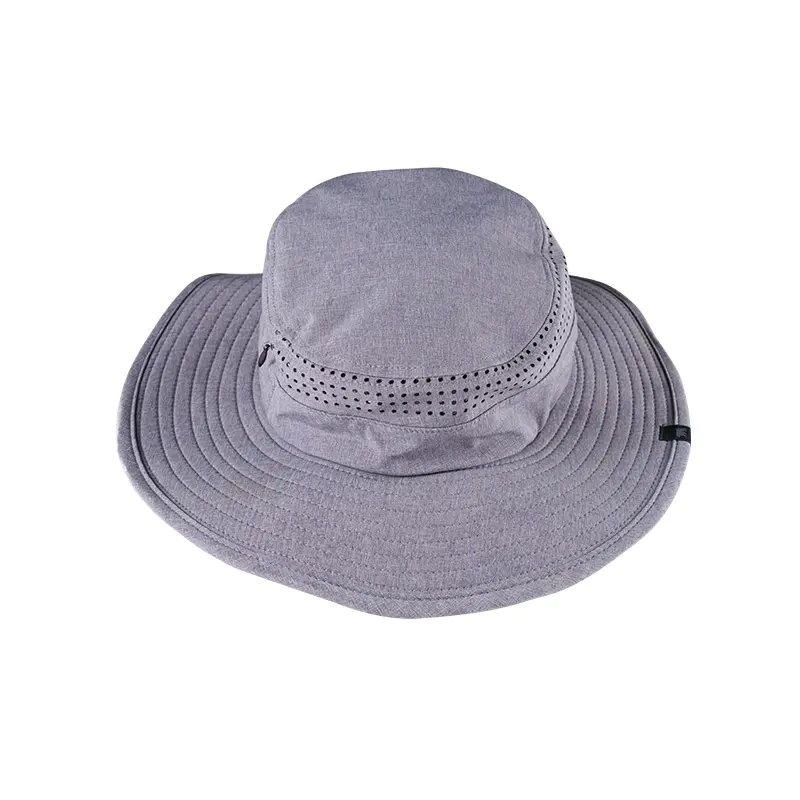
Because the braid itself defines the core structure, a woven straw bucket hat can typically be varied in brim width, crown height, and trim — a grosgrain band, a drawstring, or a contrast underbrim — without altering the base weave pattern. This separation between structural braid and decorative trim lets a manufacturer offer several finished looks from what is functionally the same woven panel, which keeps tooling and sourcing simpler than developing a new weave for every design variation.
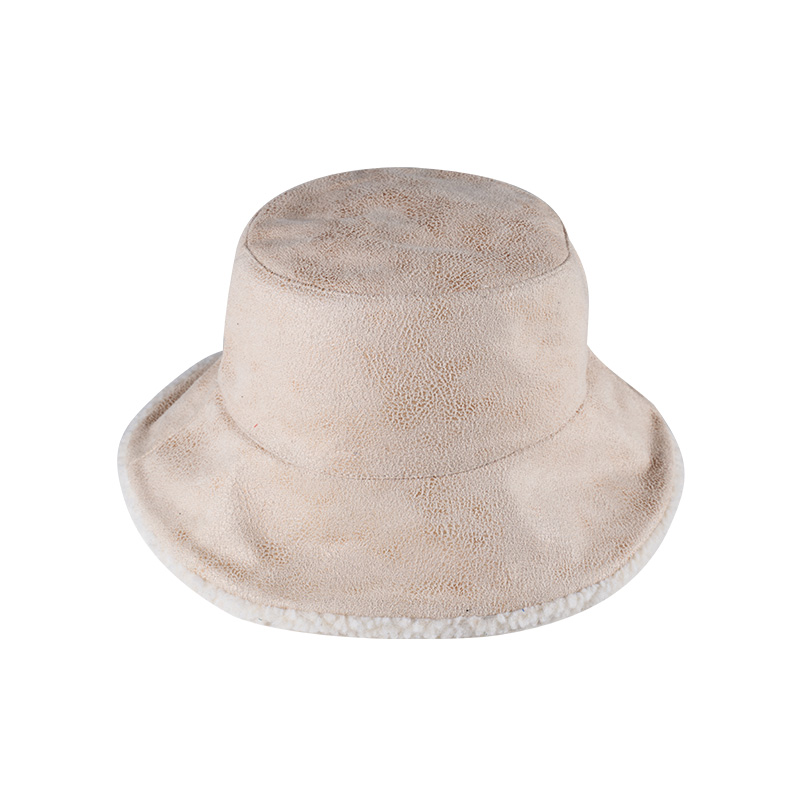
A woven straw bucket hat is worn mostly in warm-weather, high-UV settings — beach trips, outdoor festivals, gardening, and travel — where breathability and light weight matter more than water resistance. Unlike the wool and sherpa bucket hat styles built for cold-weather retail, straw construction is inherently ventilated, which suits it to summer collections and warm-climate markets rather than year-round wear.
For retailers and private-label brands sourcing this category, useful comparison points include straw type (paper, raffia, or toyo) relative to the intended price point and durability expectations, brim width against current styling trends, trim and closure options, and how consistently braid density holds across a full production batch rather than just the sample piece. Buyers working with Taizhou Huangyan Shengmeilai Hat Factory and similar manufacturers can also compare how straw styles are packaged and shipped, since an unstructured woven hat needs different handling than a stiffened fabric one to avoid crushing the brim in transit. Getting a woven straw bucket hat order through customs and into retail packaging intact often comes down to this handling detail as much as the braid quality itself.
 +86-13606823477
 Hujiaqiao Village, Yuanqiao Town, Huangyan District, Taizhou, Zhejiang, China

 English
 Español