Oct , 2026 , 09
By Shengmeilai
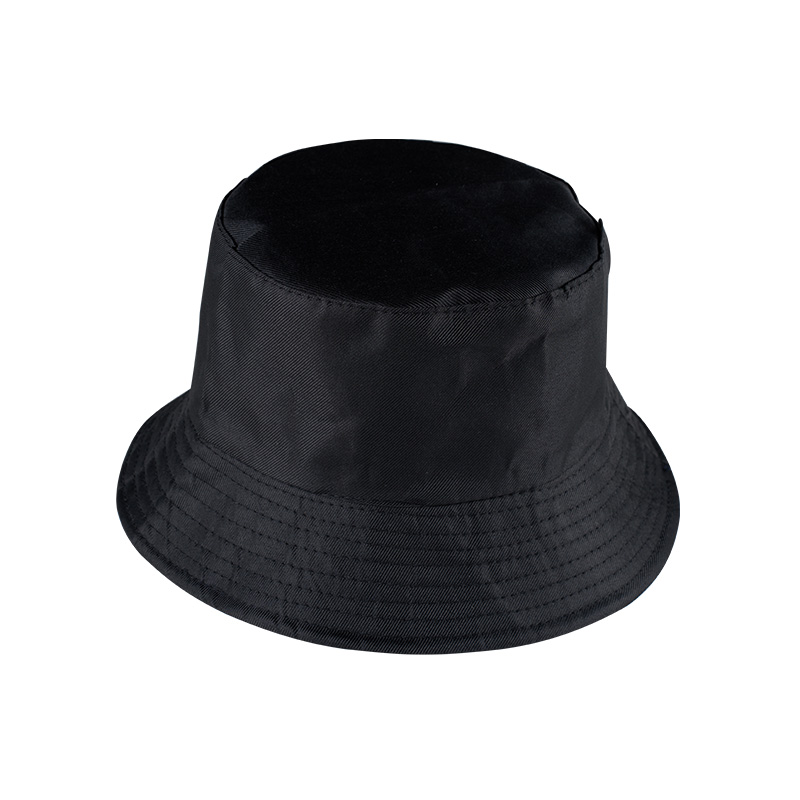
A printed or patterned bucket hat can hide small differences in fabric tone, because the eye is busy with the pattern. A plain one cannot. Every Solid Bucket Hat puts one color across the crown, the sidewall, and the brim, and any shift between those pieces, or between one production run and the next, is visible from across a shop floor.
Fabric is dyed in lots, and two lots of the same named color rarely match perfectly. The differences are small, but on a Solid Bucket Hat the crown panel, the sidewall strip, and the brim fabric sit directly next to each other, so a slight tonal mismatch reads as a flaw in the hat rather than a property of the cloth. Buyers who have received a batch with a faint two-tone effect usually trace it back to panels cut from different rolls.
The practical control sits in the cutting room. Production teams making a Solid Bucket Hat order generally assign a dye lot to the whole run and cut crown, sidewall, and brim pieces from that lot only, rather than mixing rolls to use up remnants. This takes more planning, because fabric has to be bought or reserved in a quantity that covers the full order. Reorders raise the same issue: a second run is likely to come from a new dye lot, so it helps to keep a physical swatch from the approved initial batch as the standard for later ones. Some buyers also ask the factory to store a labeled sample hat from each approved lot, which gives a finished-product reference as well as a fabric one.
On a patterned fabric, stitching disappears into the print. On plain cotton, every stitch line shows, and brims are commonly sewn in several rows to hold their shape, which makes those rows a visible feature. A Solid Bucket Hat with thread that is a shade off from the fabric looks untidy even when the stitching itself is straight. Thread is dyed in its own lots, so thread color needs checking against the fabric at the same stage as the fabric lots themselves.
Bucket hats are commonly made from cotton, denim, or polyester, and the same dye shade can look different across them. Cotton tends to read as softer and more matte, while polyester usually carries more sheen, so a color approved on one fabric should not be assumed to carry over to another. Buyers developing a Solid Bucket Hat range across several fabrics often approve each fabric and color pairing separately instead of working from a single color card.
Retailers who reorder fast-selling colors during a season are often more concerned about match to the earlier batch than about the original color choice. Agreeing on a physical standard and an acceptable tolerance before the opening order gives both sides something concrete to check later, and it turns a subjective color complaint into a comparison against an agreed sample. For a Solid Bucket Hat line that changes color palettes by season, a short list of core colors reordered regularly, plus seasonal colors ordered once, keeps the matching question manageable.
For distributors and private-label brands sourcing this category, useful comparison points include how a supplier assigns dye lots across a production run, whether crown, sidewall, and brim are cut from the same lot, how thread color is checked against fabric, and whether physical standards are retained for reorders. Taizhou Huangyan Shengmeilai Hat Factory, based in Huangyan District, Taizhou, Zhejiang, produces bucket hats in cotton, denim, and polyester, including lightweight cotton styles in bright solid colors, under a quality management system covering production control. Buyers comparing a Solid Bucket Hat across suppliers can ask for sample swatches from two separate lots to see how closely the same color repeats before placing a larger order.
 +86-13606823477
 Hujiaqiao Village, Yuanqiao Town, Huangyan District, Taizhou, Zhejiang, China

 English
 Español