Jul , 2026 , 31
By Shengmeilai
Production planners at contract cap factories track two things closely each quarter: raw material lead times and the shifting ratio of solid-panel orders versus baseball cap with netting orders. That ratio has moved noticeably over the past several seasons, and the timing behind it says something about how buyers are rethinking headwear specs for hot-climate workforces and outdoor promotional campaigns alike.
Buyers placing bulk orders for spring and summer delivery typically submit specs for a baseball cap with netting between October and January, well ahead of the actual wearing season. This window gives cutting rooms time to source mesh fabric in matched colorways, since dye lots for polyester mesh can vary batch to batch and factories prefer to lock enough yardage from a single lot to cover the full order.
Late-cycle buyers who submit specs in February or March for a summer delivery often face a narrower fabric selection, since the mesh colors ordered earliest in the season tend to sell through factory stock before later reorders arrive. Planners at SML Cap Factory note that buyers requesting a mesh back panel in a less common shade, such as safety orange or fluorescent yellow, need a longer lead time than common colors because those shades run in smaller production batches at the mill.
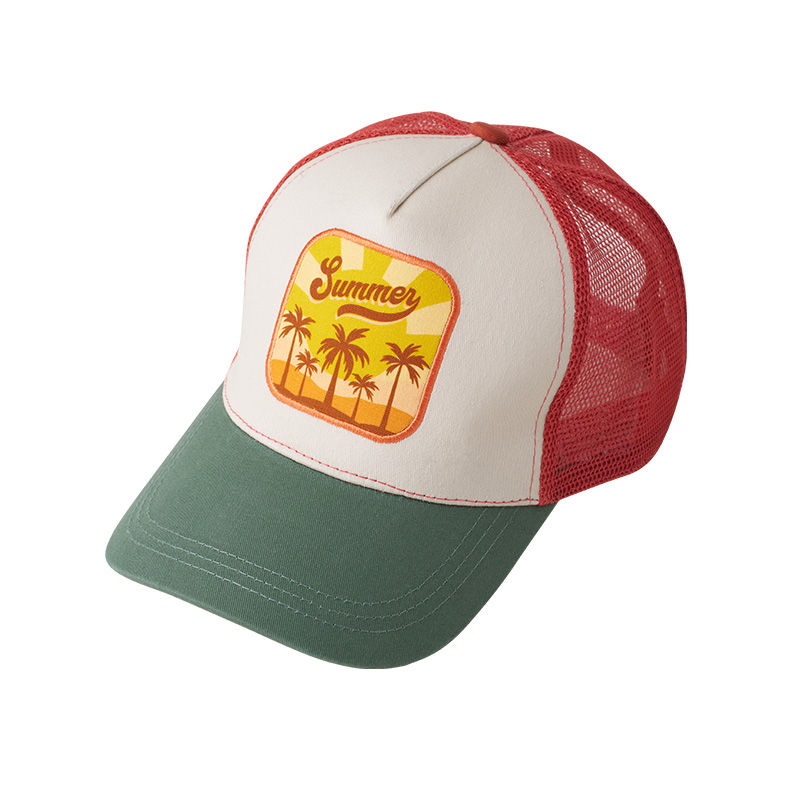
Sample requests for a baseball cap with netting cluster around two points on the calendar: just before major trade shows and immediately after buyers return from sourcing trips with reference photos from competitor booths. A physical sample takes roughly seven to ten working days to produce once pattern and mesh specs are confirmed, longer if the buyer requests a custom mesh gauge not already stocked at the factory.
Buyers who skip the physical sample stage and approve from digital renderings alone sometimes discover during bulk production that mesh opacity looks different under factory lighting than it did on screen. Production managers now recommend at least one physical swatch check for every ventilated headwear order involving printed or dyed mesh, since screen color rendering rarely matches the finished panel exactly.
Uniform contracts for construction and logistics fleets typically renew on twelve- or twenty-four-month cycles, and renewal periods are when buyers often switch cap specs. A fleet operator renewing a uniform contract in autumn may request a baseball cap with netting after receiving feedback from drivers about heat discomfort during the prior summer, shifting an order that previously specified a plain twill crown.
|
Renewal Trigger |
Typical Timing |
Common Spec Change |
|
Annual safety review |
Q1 |
Add mesh side panels |
|
Driver or worker feedback survey |
Post-summer |
Switch to full mesh back |
|
New regional contract |
Varies by quarter |
Match the existing team spec |
|
Budget cycle reset |
Q4 |
Reduce order size, keep mesh |
Feedback-driven changes tend to be technically specific, since workers describing heat discomfort often point to exact areas of the head where sweat pools, which pattern makers then translate into panel placement rather than a blanket mesh upgrade across the whole crown.
Factories maintaining direct relationships with mesh mills can shorten lead time for a baseball cap with netting order by holding a rolling stock of common colors — black, navy, gray, and white — while sourcing less common shades on a made-to-order basis. This arrangement lets a factory quote a shorter lead time on standard colors while being upfront with buyers about longer timelines for custom shades.
Mesh gauge selection also affects timing. A tighter weave used for custom cap manufacturing aimed at dust-heavy environments, such as agricultural or warehouse settings, requires a different mill run than the looser weave typically used for general outdoor promotional caps, and mills batch these gauges separately rather than running them on demand.
Buyers shipping to Southern Hemisphere markets place baseball cap with netting orders on a calendar roughly six months offset from Northern Hemisphere buyers, which factories use to balance mesh-cutting line capacity across the year rather than facing a single seasonal spike. A factory running mesh orders for both hemispheres in parallel keeps sewing lines assigned to mesh work active across more months than a factory serving only one region, smoothing labor scheduling for operators trained specifically on mesh insertion techniques.
 +86-13606823477
 Hujiaqiao Village, Yuanqiao Town, Huangyan District, Taizhou, Zhejiang, China

 English
 Español