Aug , 2026 , 14
By Shengmeilai
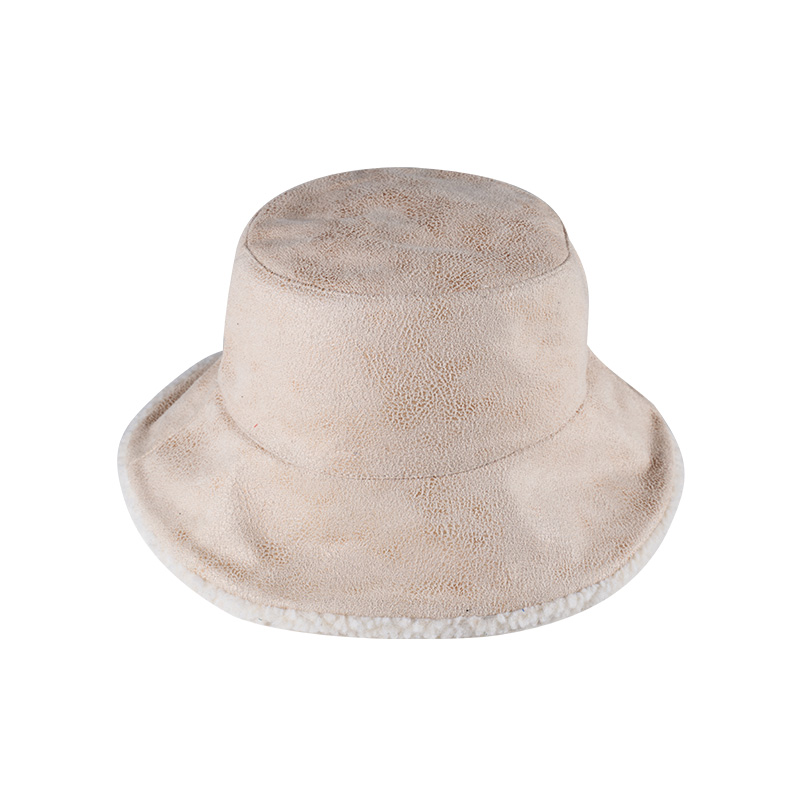
Winter headwear buyers sourcing a white sherpa bucket hat for the initial time often assume the category behaves like standard cotton bucket hats with a different fabric swapped in, only to discover that plush and faux-fur materials introduce a distinct set of quality risks that a cotton-focused vetting checklist doesn't catch.
White sherpa fabric shows discoloration and yellowing far more visibly than darker plush materials, and a white sherpa bucket hat that hasn't been tested for colorfastness under repeated handling and light exposure can develop an uneven, dingy appearance within months of retail display. Buyers should ask suppliers whether colorfastness testing has been conducted specifically on white or light-colored sherpa batches, since a supplier's general plush fabric testing data from darker colorways doesn't necessarily predict how a white variant will hold up.
Sherpa fabric pile density — how thick and full the fleece texture appears — can vary between fabric suppliers and even between production lots from the same supplier, and a faux fur bucket hat with inconsistent pile density across a bulk order creates a visibly uneven product line when units are displayed side by side on a retail shelf. Buyers placing volume orders should request pile density specifications in writing and ask whether incoming fabric batches are checked against that specification before cutting begins.
|
Vetting Question |
What a Reliable Supplier Should Confirm |
|
Colorfastness testing on white/light colorways |
Tested specifically, not extrapolated from darker colors |
|
Pile density consistency |
Checked against a written specification per fabric batch |
|
Brim structure under sherpa's added weight |
Reinforced to prevent sagging over time |
|
Certification for winter plush headwear |
Documentation naming the specific pile material used |
A standard cotton bucket hat brim holds its shape with relatively light structural support, but sherpa fabric adds noticeably more weight and bulk than cotton, and a brim built to the same structural spec as a lightweight cotton version can sag or lose its crisp edge faster under that added load. A custom bucket hat factory producing both lightweight and plush winter variants needs separate brim reinforcement specifications for each material category, and buyers should confirm the brim structure has been engineered for sherpa's specific weight rather than reused from a standard summer bucket hat pattern.
Sherpa and faux fur materials shed fibers more than woven cotton, and a fleece-lined hat supplier using a poorly secured lining attachment can produce hats that shed loose fibers onto the wearer's head and clothing during normal use, a defect that generates return complaints even when the outer fabric quality itself is fine. Buyers should ask specifically how the lining is attached — stitched, bonded, or a combination — and whether shedding has been tested after repeated wear cycles rather than only assessed on a brand-new sample.
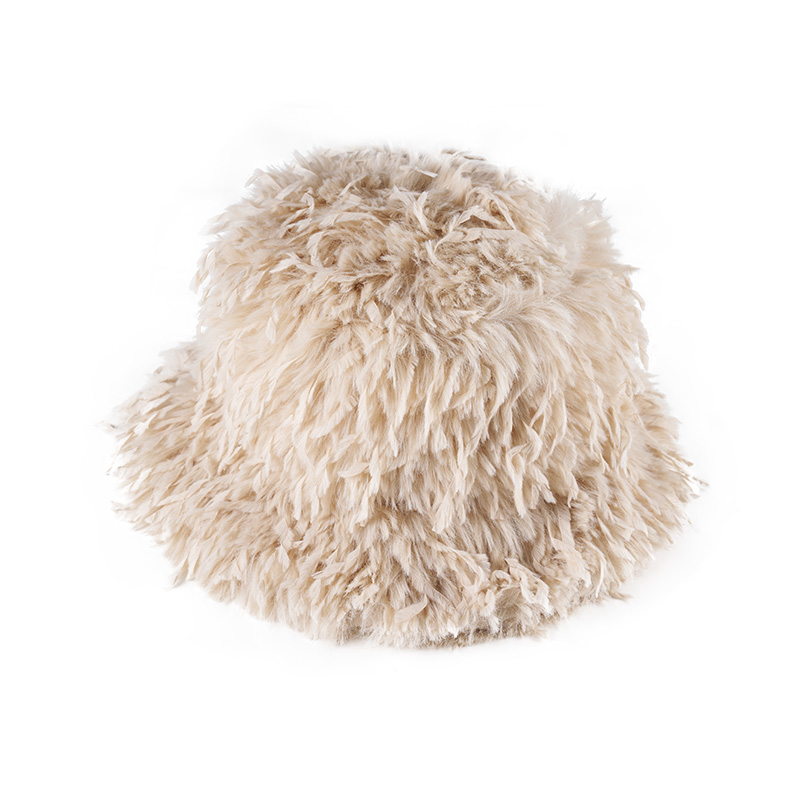
Sherpa and plush fabrics can develop crushed, flattened patches if packed too tightly or stored under weight during a long shipping journey, and a white sherpa bucket hat that arrives with visibly flattened pile in certain spots looks defective even when the underlying fabric quality is sound. Buyers should ask suppliers what packaging method is used to protect pile texture during transit — individual poly bags with adequate headroom, rather than tightly compressed cartons — since this detail affects arrival condition in ways that a factory's finished-goods inspection at the point of production doesn't fully anticipate.
A white sherpa bucket hat built from a thicker, heavier fabric than a standard cotton bucket hat may need a slightly adjusted internal circumference to maintain the same finished fit, since the fabric itself takes up more internal volume than a thinner material would at the same pattern dimensions. Buyers standardizing sizing across a mixed product line — cotton bucket hats alongside sherpa variants — should confirm the supplier has adjusted pattern dimensions to account for fabric thickness differences, rather than assuming identical pattern pieces produce identical fits across different fabric weights.
Not every fabric marketed as "sherpa" actually uses the looped, fleece-style knit construction that defines genuine sherpa material, and some suppliers substitute a cheaper faux fur or plush fabric with a different texture and drape while still using the sherpa label loosely in product listings. Buyers ordering a white sherpa bucket hat specifically for its characteristic looped texture should ask suppliers to confirm the actual knit construction being used, since a visually similar but differently constructed substitute can behave differently in terms of warmth, pilling resistance, and how it holds its texture after repeated handling in a retail environment.
A single sample unit of a white sherpa bucket hat approved during the sourcing stage doesn't guarantee that a bulk production run will match that sample precisely, particularly with a natural-fiber-look material like sherpa where subtle variation is more visually apparent on white or light colorways than on patterned fabrics. Buyers should request a small pre-production batch — rather than relying on a single hand-selected sample — to confirm that pile density, color, and brim structure hold steady before committing to a full container order, since this intermediate check catches drift that a single approved sample cannot reveal on its own.
 +86-13606823477
 Hujiaqiao Village, Yuanqiao Town, Huangyan District, Taizhou, Zhejiang, China

 English
 Español