Sep , 2026 , 18
By Shengmeilai
A six-panel structured front and an adjustable back strap look like a simple combination on paper, but the details inside that combination decide whether an Adjustable Baseball Cap holds its shape and closure through years of daily wear rather than only through the initial handling right off the shelf.
A buckle strap, a hook-and-loop closure, and a plastic snapback all adjust the same basic cap in different ways, and each suits a different buyer more than it suits any particular cap design. Workwear and tactical buyers tend to prefer hook-and-loop for its wide, forgiving adjustment range under a hard hat or safety gear, while streetwear buyers gravitate toward a snapback for its casual, recognizable click-adjust feel, and fashion-oriented buyers often lean toward a cleaner buckle strap. Building an Adjustable Baseball Cap around a hardware option chosen for the actual sales channel, rather than defaulting to one style across every order, keeps the closure matched to how the end customer expects the cap to feel in hand.
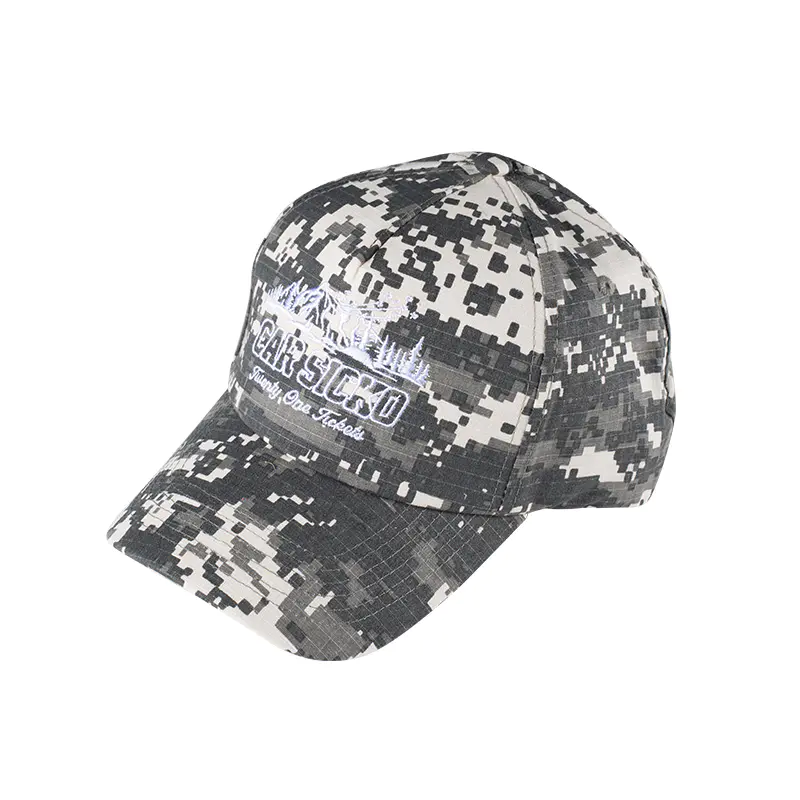
The structured front panels on an Adjustable Baseball Cap typically rely on an internal stiffening layer, commonly buckram or a foam interlining, to keep their shape rather than collapsing inward like an unstructured dad-cap panel would. That stiffening layer matters even more once embroidery enters the picture, since dense stitching pulls against the fabric as the needle passes through it repeatedly, and a properly stiffened panel resists puckering under that stitch density in a way a soft, unsupported panel cannot. Coordinating stiffening material with the embroidery density planned for a given logo on an Adjustable Baseball Cap keeps the finished front panel flat and clean rather than showing thread-pull distortion around a detailed design.
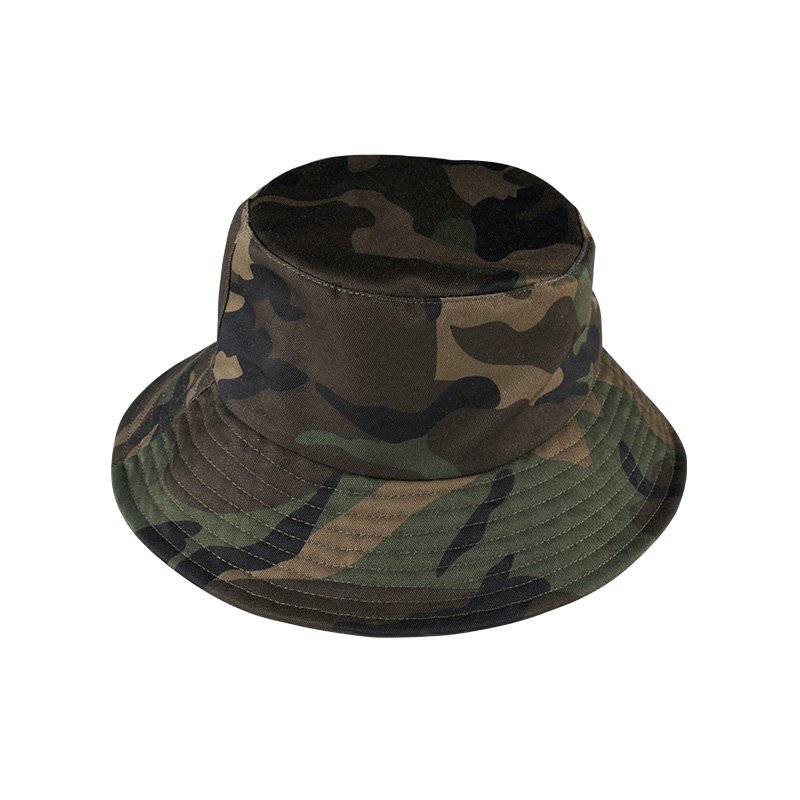
A camouflage or other multi-color print pattern applied to woven cap fabric has to register consistently across every panel in a production run, and that consistency depends heavily on which print process a factory uses rather than on the pattern design itself. Running print consistency checks between production batches catches drift before it reaches a full container of finished caps, since a subtle shift in registration or color saturation between an early run and a later one on the same Adjustable Baseball Cap order becomes obvious the moment units from both batches sit side by side on a retail shelf. Buyers requiring tight pattern matching across a large order benefit from a pre-production sample sign-off specifically because print drift is a real production variable rather than a fixed, guaranteed constant.
Strap hardware, panel stiffening, and print consistency each shape a different part of how an Adjustable Baseball Cap performs once it leaves the sample stage, and getting all three matched to the actual order, rather than treated as fixed defaults, is what keeps a bulk run performing the way the approved sample promised.
 +86-13606823477
 Hujiaqiao Village, Yuanqiao Town, Huangyan District, Taizhou, Zhejiang, China

 English
 Español